
Title: Babystar
MPA Rating: Not Yet Rated
Director: Joscha Bongard
Starring: Maja Bons, Bea Brocks, Liliom Lewald
Runtime: 1 hrs 38 mins
What It Is: Luca (Bons) is a “baby star”, surveilled since she was in the womb by her wealthy, health-and-wellness vlogger parents and their audience of millions. Luca is content being Tiktok famous, regarded as special, pretty, and perfect in every way with millions of followers of her own–that is until her mother decides she wants to have another child. Repulsed, Luca starts to realize the life-shaking effect this may have on her relationship with her parents and the eyes their viewers. In response, she rebels the only way she knows how: influencing.
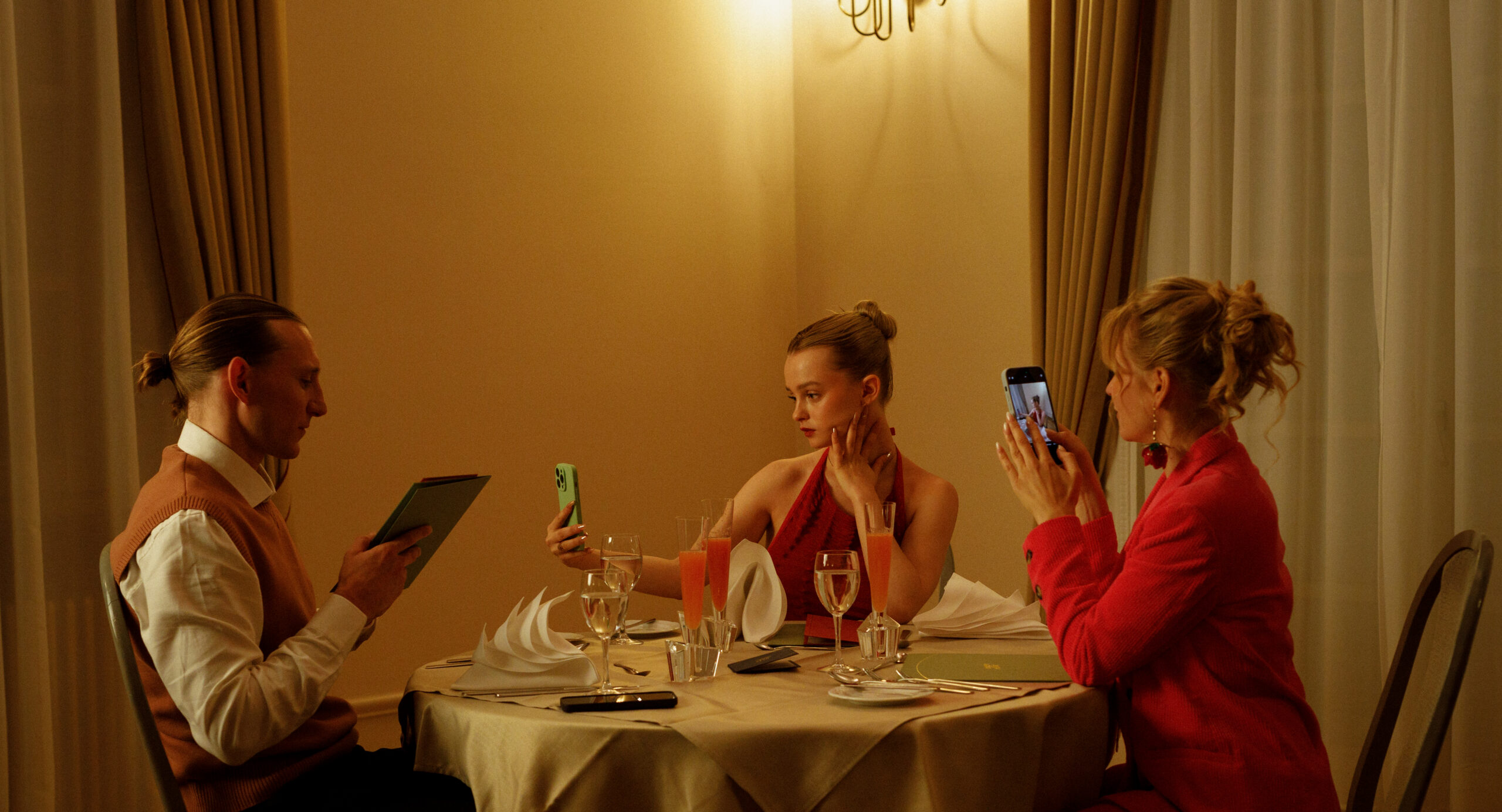
What We Think: The film begins with footage of an empty house. What is important is not necessarily what is in the house, but how we are seeing this house. We view every room as if it were CCTV footage: every angle of each room visible. The air is uneasy, almost as if someone is about to walk in and commit a crime. That is how it kicks off its narrative about a vloggerista princess and her parents, all of whom have normalized a severe addiction to their phones and the influencer lifestyle. As we watch, this scene that frames their beautiful house as liminal and cold begins to make sense: this house is not a house but a set, much like in Big Brother. It is a prison.
In this day and age, we are now all too familiar with the horrifying concept of vlog channels, influencers, and parasocial relationships. Many of us are only just starting to resonate with the effect of phone addiction and the constant need to individualize, entertain, represent, advertise, and profit on platforms. Social media is extremely toxic. I know as much as anyone else, as someone who both posts somewhat regularly to social media and demands to be entertained everyday by it. Yes, it is a problem for most who are on any platform. Yet, what are we doing about it? It feels like such an integrated part of our lives, especially for those who feel like they have no other choice but to post in order to gain exposure, build careers, and/or gain validation. The horror in Babystar is which the level that these characters take that reality that many of us deal with and are navigating today and how the social media pipeline leads to immeasurable control over its participants. Though interestingly, while this family of influencers are an outlier due to their wealth being centered on product placement and simulated “authenticity,” they aren’t even as extreme as many real-life perpetrators that have caused extreme abuse and harm to others in the name of content creation. Part of me has to appreciate that, while this movie is satirical, it still communicates the humanity of the characters that is stifled under their screens.
Luca’s angst is what motivates as her as she tries to find a way out of her parents’ control, only to find that she’s been cultivated on front of a screen for so long can barely function in real situations without performing for them. The control extends to her parents from the system she’s been raised in, that calculates their lives. Seeing this portrayal reminds of real cases of children who have been unfortunate enough to be trapped within a family vlogging channel (think, the Ruby Franke or Daddy of 5 cases). It’s difficult for Luca to find a true, likeable identity or know herself outside the persona that has been created for her through her entire life. This entire story is filmed and framed beautifully, again through a lot of those very stagnant, voyeuristic shots and artificially warm, stylish sets, making clear that these people’s lives are gilded and fake. Babystar carries the spirit of films that also satirize the soulless inner-workings of the upper-upper class like Triangle of Sadness, Saltburn, or The Menu, though without the crazy theatrics, which is a choice that is a bit of a double-edged sword in this case. While I admire the dedication to keeping the characters and story really grounded to the point of being uncanny (and kind of creepy), I do think that the film could have used a scene or two more matching or topping the energy of the restaurant scene: which is to say, just something a tad more memorable, though not absurd, to really imprint on people’s minds. Still, this is a really great film that I think should stand as a reference point as to relflect on how our minds and lives are being manipulated by technology and not the other way around. Not to mention, the nuanced performances by Maja Bons, Bea Brocks, Liliom Lewald, are pitch-perfect.
Our Grade: B, This modern coming-of-rage in the midst of the likes economy may haunt you, or at the very least, give you the ick. We as we the audience have for years now been privy to the problematic existence of the influencer industry. Through its voyeuristic eye Babystar makes it clear like a kick and a scream: performance is a prison. While a lot of the conversation and concerns may be well-known, if not experienced by many, namely Gen-Z, it’s important to observe how the discussion branches across all generations: while Luca struggles as someone who is dependent on social media and operates unconventionally based on her privilege and understanding of the way life works, the horror lies within the hyper-consumerist system her parents have involuntarily raised her in. Everyone in any generation should observe not only why “social media bad”, but how it and AI can genuinely ruin our living our lives authentically and our ability to function without the baggage of needing everything to be recorded and televised.